

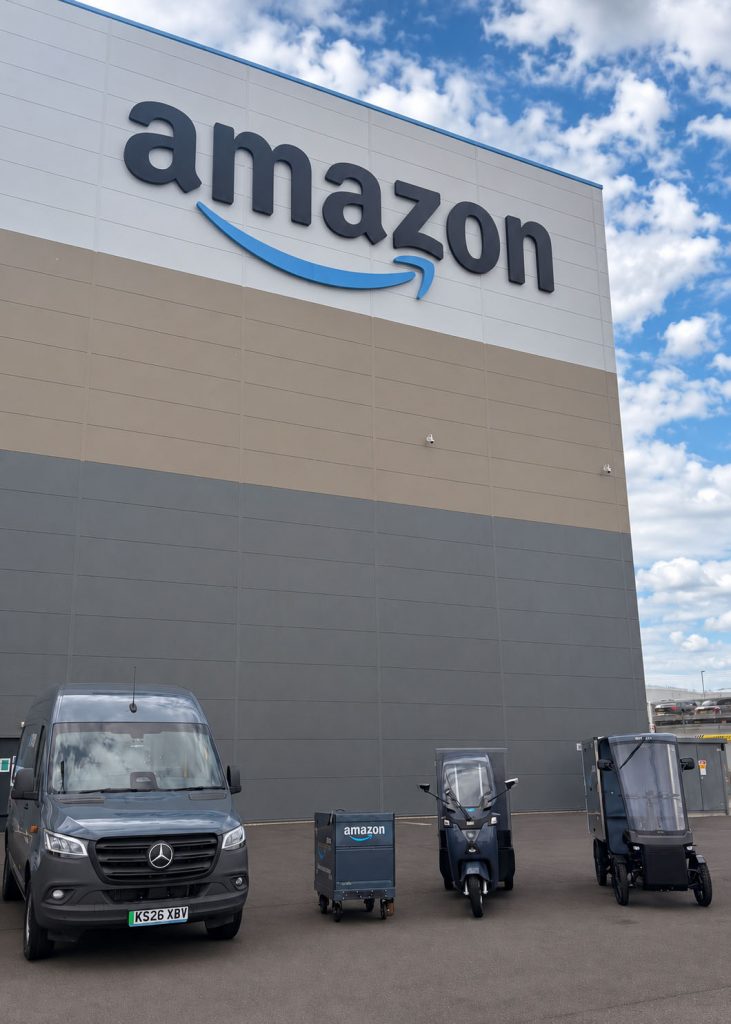
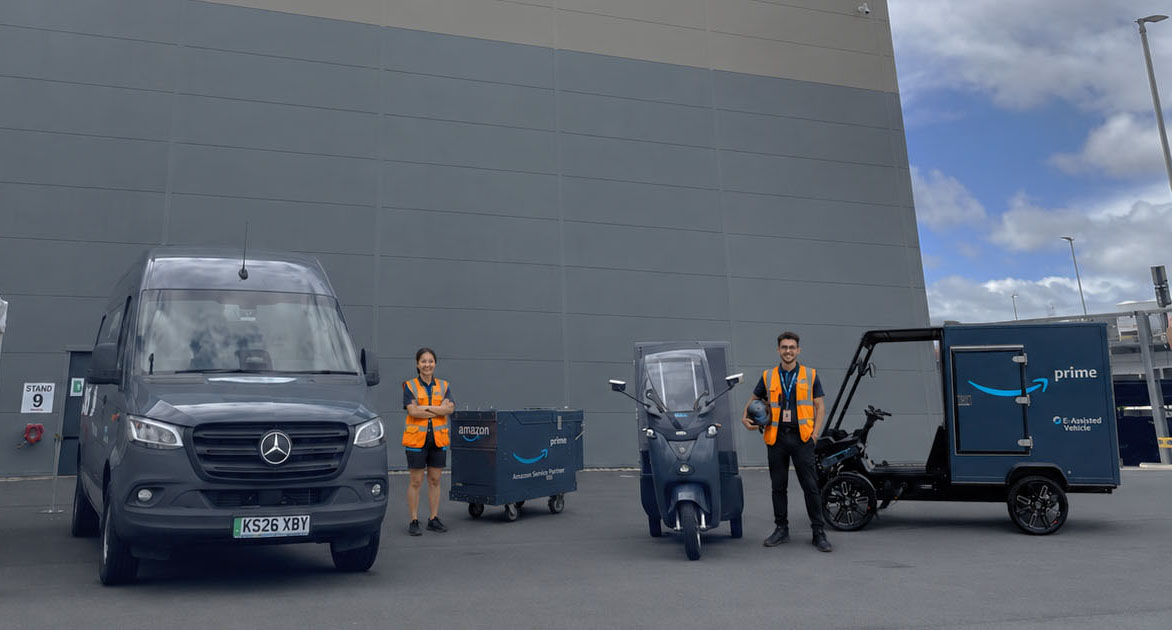
During Delivering the Future EMEA 2026 , held on June 3 and 4, 2026 at LCY3, Amazon’s logistics center in Dartford, UK , Amazon presented different solutions that show where European logistics is headed: automation, robotics, artificial intelligence, electric vehicles and new tools to improve last mile delivery.
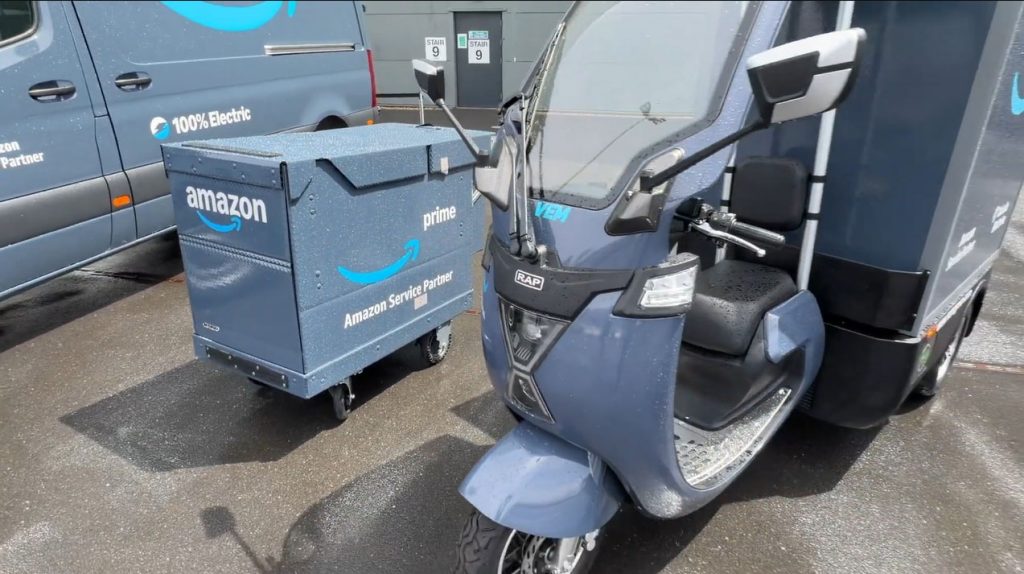
Among these solutions were the foldable manual delivery carts developed by the Spanish company MOOEVO , a tool designed to facilitate the work of delivery drivers in real urban environments. Their presence at an event focused on the future of logistics reflects a key idea: innovation is not limited to what happens inside the warehouse.
Foldable pushcarts: the key link between logistics automation and the urban last mile
As large logistics centers move towards increasingly automated operations, the last mile still needs practical, compact, and easy-to-use solutions. Folding carts bring some of that efficiency to the street, connecting order picking with the most important moment in the entire process: final delivery to the customer.
From this point on, it is interesting to analyze why foldable pushcarts remain a fundamental piece within urban delivery operations, even in a context where robotics and artificial intelligence are transforming logistics at high speed.
Automation is advancing within logistics centers
Logistics is undergoing a rapid transformation. Major operators are incorporating mobile robots, artificial intelligence, sensors, 3D scanners, and automated sorting systems to move millions of packages with greater speed and accuracy.
A prime example of this evolution was showcased during Delivering the Future EMEA 2026, held on June 3 and 4, 2026, at LCY3, Amazon’s logistics center in Dartford, UK. In facilities like this, technology optimizes routes, reduces errors, improves space management, and accelerates the flow of goods from product entry to preparation for delivery.
The modern warehouse is no longer just a storage space. It’s a highly connected environment where people, software, and machines work in a coordinated way to ensure each package moves more efficiently through the logistics chain.
The challenge doesn’t end in the warehouse
However, all that internal efficiency must then face a much less controlled reality: the city.
Once the package leaves the logistics center or the delivery van, a particularly complex phase begins. Narrow streets, pedestrian zones, sidewalks, buildings without direct access, traffic restrictions, long walking distances, and large volumes of packages make the urban last mile one of the main challenges of modern delivery.
In this area, technology cannot be limited to automating the warehouse. It must also assist the operator in the field, where conditions are constantly changing and where ergonomics, maneuverability, and load capacity are critical factors.
Therefore, although robotics and artificial intelligence occupy a large part of the conversation about the future of logistics, there are seemingly simpler solutions that continue to play a fundamental role.
“ Automation is transforming logistics centers with robots, artificial intelligence, and advanced sorting systems. However, the last-mile challenge begins when the package leaves the warehouse. At that point, folding trolleys remain an essential solution for deliveries in dense urban areas, improving operator ergonomics and protecting the merchandise. ”
The role of collapsible pushcarts in the last mile
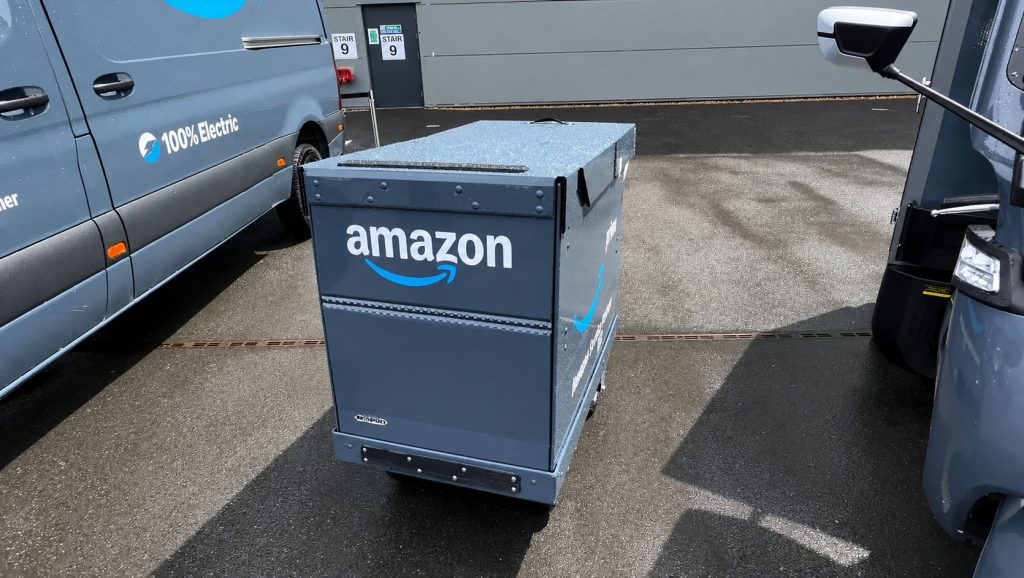
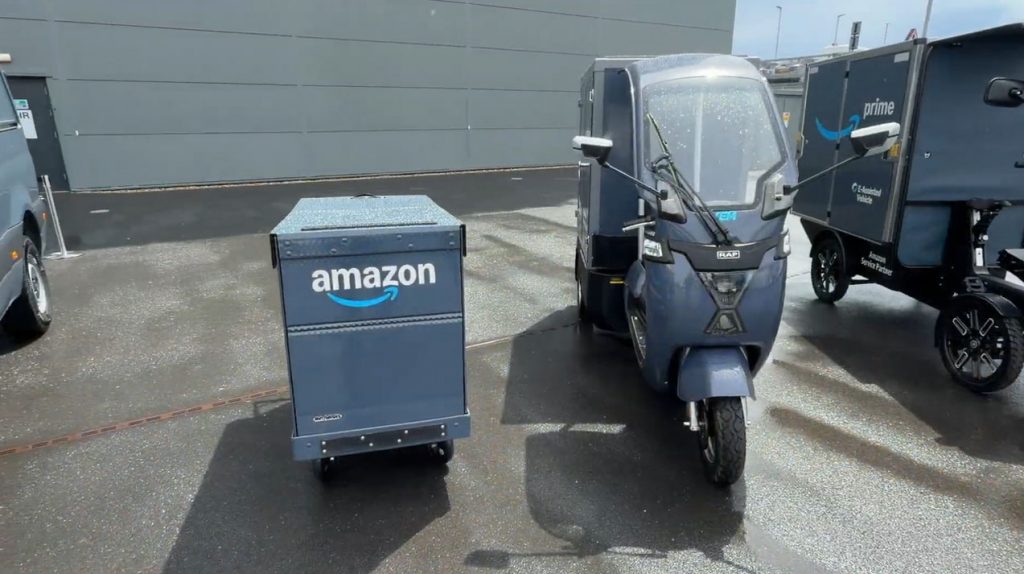
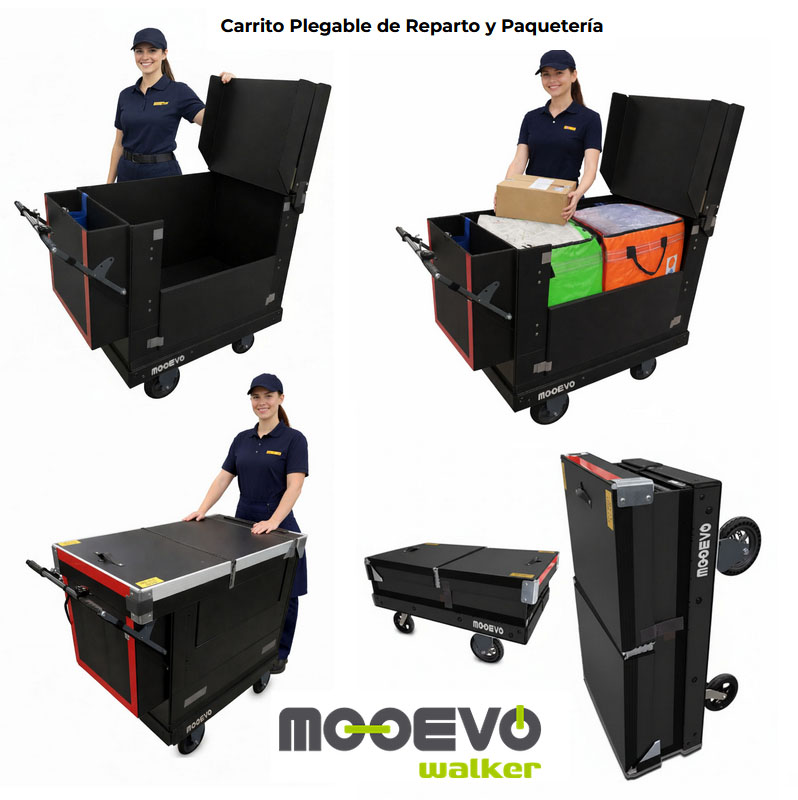
Folding pushcarts are an especially useful tool for urban delivery operations. They allow packages to be transported from the van, microhub, or consolidation point to the final destination, reducing unnecessary trips and facilitating work in areas where vehicles cannot easily access.
Its main value lies in the combination of simplicity, capacity, and flexibility. A well-designed pushcart can move along sidewalks, pedestrian areas, building entrances, and dense urban environments, maintaining good load capacity and taking up little space when not in use.
Furthermore, the foldable design is especially important in operations with limited space. In urban delivery, every centimeter counts: inside a van, in a warehouse, in a microhub, or in a loading area. Being able to fold the cart facilitates storage, transport, and the organization of daily operations.
More efficiency, less effort, and a better work experience
The last mile doesn’t just demand speed. It also demands solutions that help reduce the physical effort of delivery drivers.
A folding delivery cart allows you to move more packages with less direct strain on the operator’s body. This can improve ergonomics, reduce fatigue, and facilitate longer urban routes or deliveries with higher volumes.
In intensive operations, this difference is important. It’s not just about transporting goods, but about doing so comfortably, safely, and consistently throughout the day. Assisted mobility, wheel design, stability, working height, and ease of maneuverability are key aspects for a cart to be truly useful in real-world conditions.
That’s why at MOOEVO we see pushcarts as more than just a container on wheels. They are an operational tool that connects the efficiency of the logistics system with the daily experience of those who make the deliveries.
Security, corporate image and data protection
Foldable pushcarts also provide value in aspects that go beyond the movement of packages.
A robust, enclosed delivery cart can improve the security of goods during transport on foot. This is especially relevant in densely populated urban environments, where packages must remain protected throughout the journey.
It also helps improve the delivery company’s corporate image. A cart specifically designed for the operation, with a professional aesthetic and consistent brand integration, conveys order, reliability, and modernity.
Furthermore, protecting customer privacy is crucial in parcel delivery. Packages may contain labels, addresses, and personal data. Using secure and well-organized packaging helps limit the exposure of this information during delivery.
The connection between technology and the street
The automation of logistics centers will continue to advance. We will see more and more robots, more software, more sensors, and more intelligent systems inside warehouses.
But logistics doesn’t end when the package is sorted. It ends when it reaches the customer.
Between the automated warehouse and the delivery door lies a physical, urban, and human gap that requires specific solutions. This is where foldable pushcarts play a vital role: bringing some of that technological efficiency to the street in a practical, flexible way, adapted to daily operations.
At MOOEVO, we work precisely at that intersection between logistical innovation and real urban mobility. We design compact, robust, and functional solutions for last-mile operations, designed to facilitate deliveries in increasingly demanding cities.
Because the future of logistics won’t depend solely on what happens inside the warehouse. It will also depend on how the last leg of the journey is handled.
And often, the most important innovation is the one that keeps moving after the van stops.
You might also be interested in: Spanish technology helps Amazon with electric and sustainable mobility at its Seattle headquarters
