

Manual parcel delivery carts are becoming an essential tool for urban logistics operators working in dense city environments. MOOEVO develops adaptable pushcart solutions designed to support walking delivery routes, protect parcels and improve operational efficiency. These carts help delivery teams move through pedestrian streets, low-emission zones and city centres while reducing vehicle dependency and supporting more profitable last-mile operations.
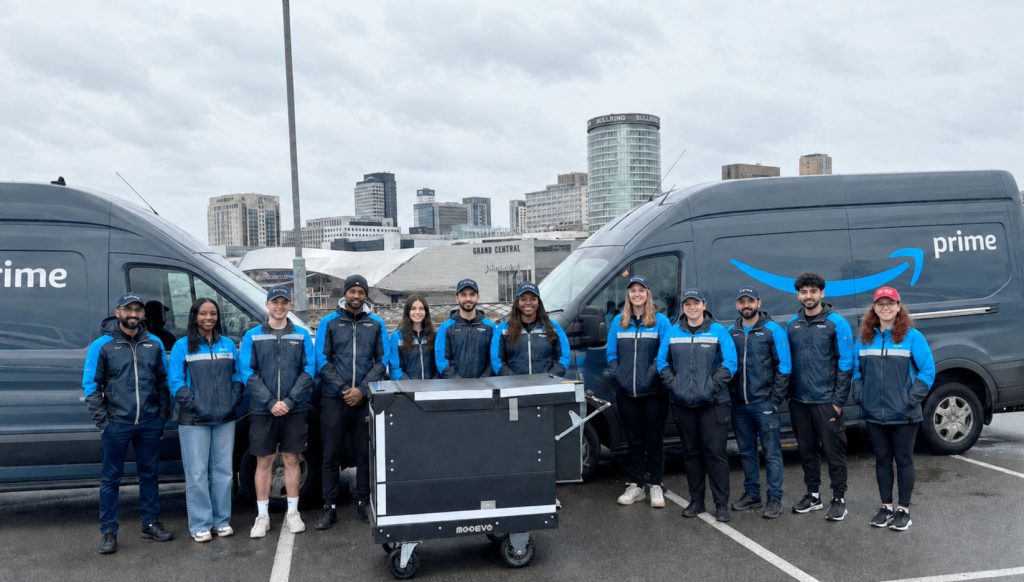
Urban parcel delivery is becoming more complex every year. City centres are more congested, vehicle access is increasingly restricted and logistics operators need to deliver more parcels with cleaner, quieter and more flexible methods. In this context, manual parcel delivery carts have become a practical and highly effective solution for walking routes and pedestrian-scale distribution.
While much of the conversation around last-mile logistics focuses on electric vans, autonomous robots, drones and cargo bikes, manual pushcarts continue to solve a very real operational need. They allow delivery teams to move parcels directly through sidewalks, pedestrian areas, residential districts, historic centres and low-emission zones where larger vehicles are limited or inefficient.
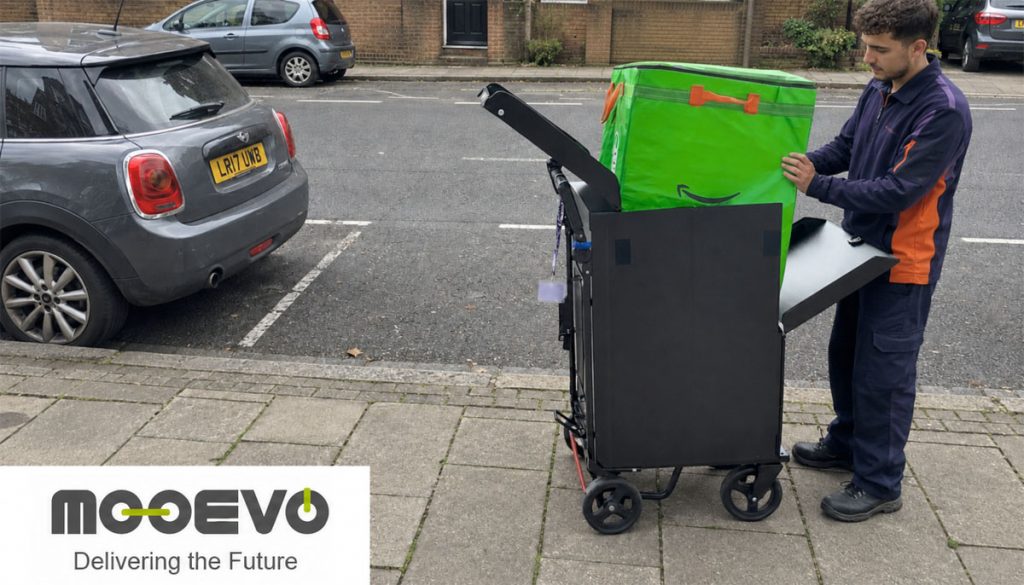
MOOEVO develops delivery cart solutions designed for this type of urban environment. Its pushcarts are conceived as practical logistics tools, not just basic transport trolleys. They are designed to help delivery teams carry parcels in an organised way, improve route productivity and operate more comfortably during long walking shifts.
One of the key benefits of manual parcel delivery carts is their ability to reduce unnecessary van movements. Instead of stopping a vehicle repeatedly in dense urban areas, logistics operators can use microhubs, delivery points or parked support vehicles as starting points for walking routes. From there, couriers can complete deliveries using a compact and efficient pushcart for sorting totes.
This model is especially useful for delivery service providers and last-mile operators working in areas with high parcel density. A well-designed cart can help couriers carry more packages per route, reduce time lost returning to a vehicle and improve the overall economics of urban delivery. For Amazon DSPs, this can translate into better route performance and higher operational profitability.
MOOEVO carts can be adapted to different route types and delivery needs. Some operations require compact foldable carts that are easy to store, load and deploy. Others need larger cargo capacity, enclosed parcel areas, weather protection or stronger structures for more demanding routes. This flexibility allows the same design approach to serve different cities, parcel volumes and operational models.
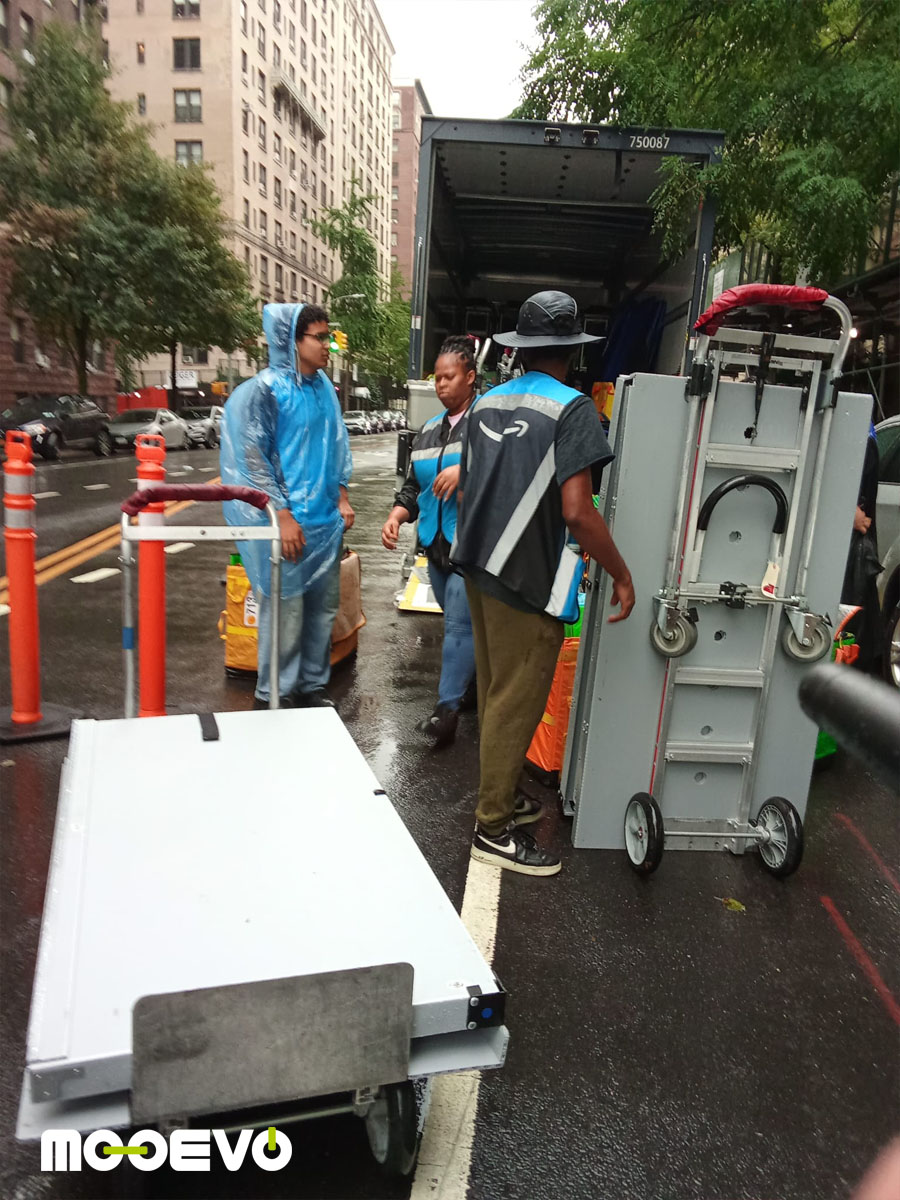
Parcel protection is another important aspect of urban delivery. Delivery carts may need to protect goods from rain, wind, dust and daily street conditions. Enclosed or covered cargo configurations help keep parcels safer and more organised throughout the route, especially when deliveries take place in unpredictable weather or exposed urban environments.
Security is also essential. In modern last-mile delivery, carts must not only carry parcels efficiently, but also help reduce the risk of theft or unauthorised access. Lockable compartments, protected cargo areas and secure closing systems can help safeguard goods while couriers complete deliveries in busy streets or multi-stop routes.
Customer data protection is another relevant factor. Parcel labels often include names, addresses, barcodes and delivery information. By keeping parcels inside a protected and controlled cargo area, delivery carts can help reduce exposure of customer information during the route. This makes the design of the cart important not only for logistics efficiency, but also for responsible delivery operations.
Foldability is one of the features that makes these carts especially useful for large logistics networks. A foldable delivery cart can be stored more easily in depots, vans or microhubs, and deployed only when needed. This improves space efficiency and gives operators more flexibility when planning different types of routes.
MOOEVO’s experience in pedestrian mobility and urban work equipment allows the company to approach delivery carts from a functional perspective. The goal is not simply to move parcels, but to support the person carrying out the route. Ergonomics, manoeuvrability, load distribution, stability and ease of use are all important factors in daily operation.
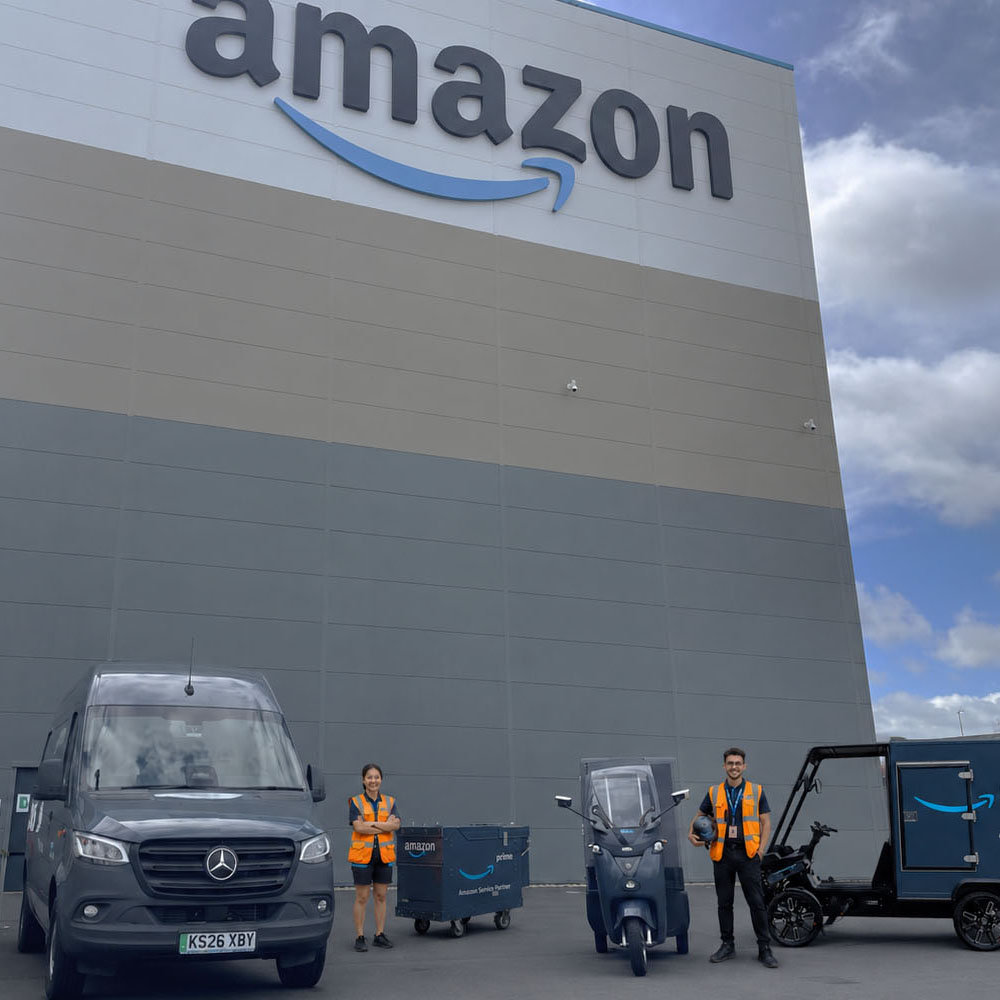
Manual delivery carts also support sustainability goals. They operate without emissions, do not require charging infrastructure and can reduce the need for repeated vehicle access in crowded areas. When combined with electric vans, cargo bikes or urban microhubs, they become part of a cleaner and more flexible last-mile ecosystem.
For cities, this type of solution can help reduce traffic pressure and noise in sensitive areas. For logistics companies, it provides a simple and scalable way to improve delivery performance. For couriers, it can make walking routes more organised, less physically demanding and more efficient.
In the future of urban logistics, not every solution needs to be highly automated or technologically complex. Sometimes the most effective tools are those that adapt naturally to the reality of the street. Manual parcel delivery carts remain one of the most reliable ways to connect logistics networks with the final metres of delivery.
MOOEVO’s configurable pushcart solutions respond to this need with practical designs for modern urban distribution. From compact foldable carts to protected parcel delivery configurations, the company offers adaptable tools for logistics operators looking to improve sustainability, efficiency, security and profitability in last-mile delivery.
