

Cities around the world are searching for ways to reduce congestion, lower emissions, and improve the efficiency of urban logistics. Recent results from New York City’s microhub program provide compelling evidence that the future of last-mile delivery will rely on a combination of localized distribution centers and lightweight mobility solutions.
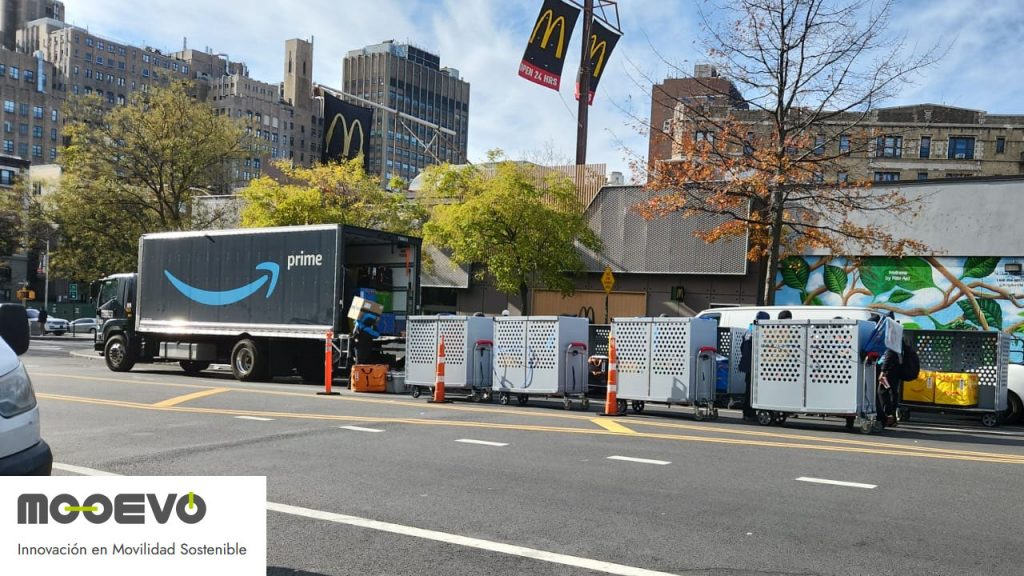
The initiative, led by the New York City Department of Transportation, demonstrated that strategically located microhubs can significantly reduce the number of truck trips required within dense urban environments. By transferring parcels from larger vehicles to smaller delivery solutions closer to their final destination, operators can improve efficiency while reducing traffic and environmental impact.
The Growing Role of Microhubs
Unlike traditional distribution centers located on the outskirts of cities, microhubs are positioned within or near urban areas. This allows logistics operators to complete the final stage of delivery using more agile transportation methods better suited to congested city streets.
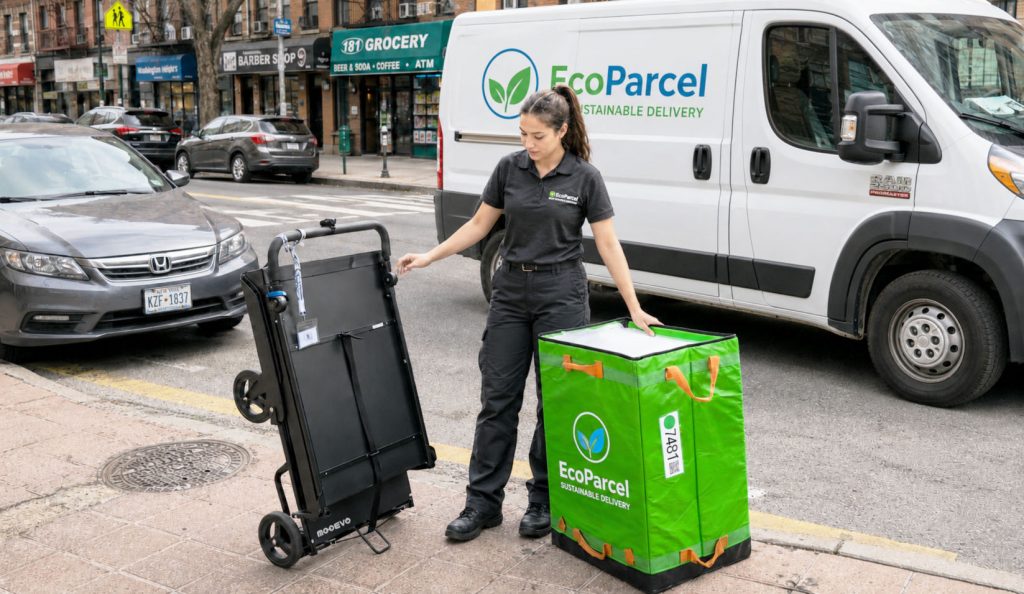
The benefits are clear:
- Fewer truck movements in city centers.
- Reduced traffic congestion.
- Lower emissions and noise pollution.
- Improved delivery efficiency.
- Enhanced pedestrian and cyclist safety.
As e-commerce volumes continue to grow, these advantages are becoming increasingly important for municipalities and logistics providers alike.
Why Delivery Carts Remain Essential
While cargo bikes and light electric vehicles often receive the most attention in discussions about sustainable logistics, delivery carts continue to play a critical role in urban operations.
In high-density environments, many deliveries still require operators to move packages through pedestrian areas, office buildings, residential complexes, hotels, hospitals, and other locations where larger vehicles cannot easily access.
For these applications, delivery carts provide unmatched flexibility. However, manual carts also present limitations, particularly when operators must transport heavy loads, navigate slopes, or cover long distances throughout the day.
The Opportunity for Electric-Assisted Delivery Carts
This is where electric-assist technology becomes a game changer.
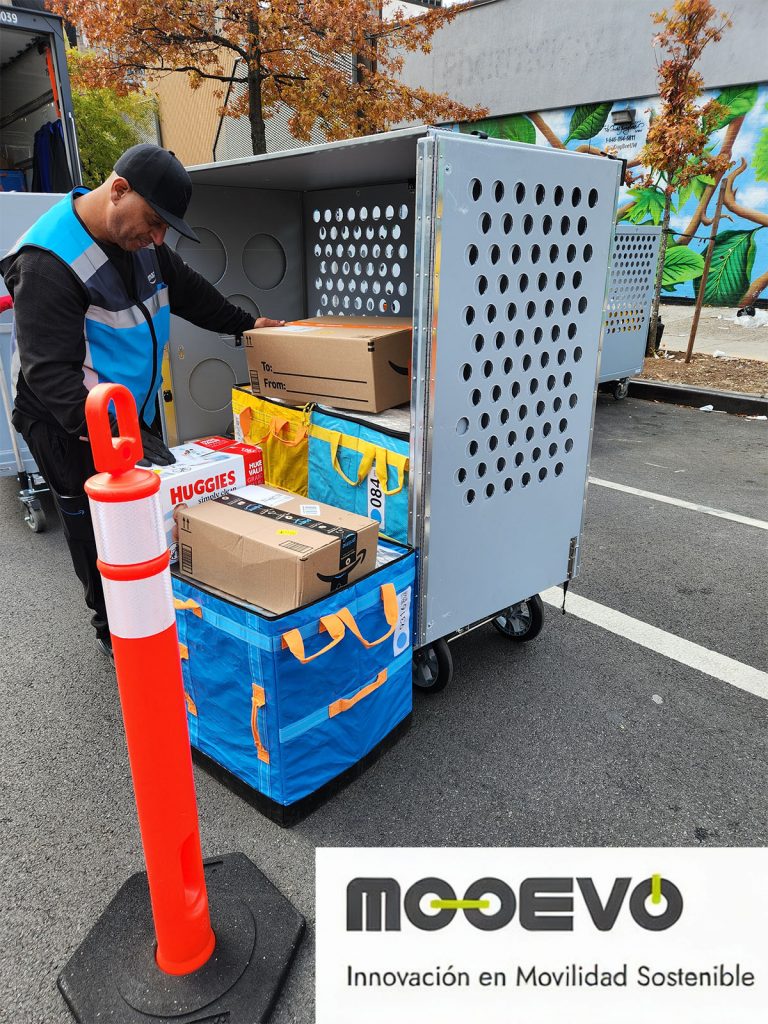
Electric-assisted delivery carts combine the maneuverability and accessibility of traditional hand carts with powered support that reduces physical effort and increases productivity. Operators can transport heavier loads more comfortably while maintaining full control in complex urban environments.
For logistics companies operating from microhubs, electric-assisted carts offer several advantages:
- Increased delivery capacity per operator.
- Reduced physical strain and fatigue.
- Improved workplace ergonomics.
- Greater operational efficiency.
- Lower dependence on larger vehicles.
- Support for sustainability objectives.
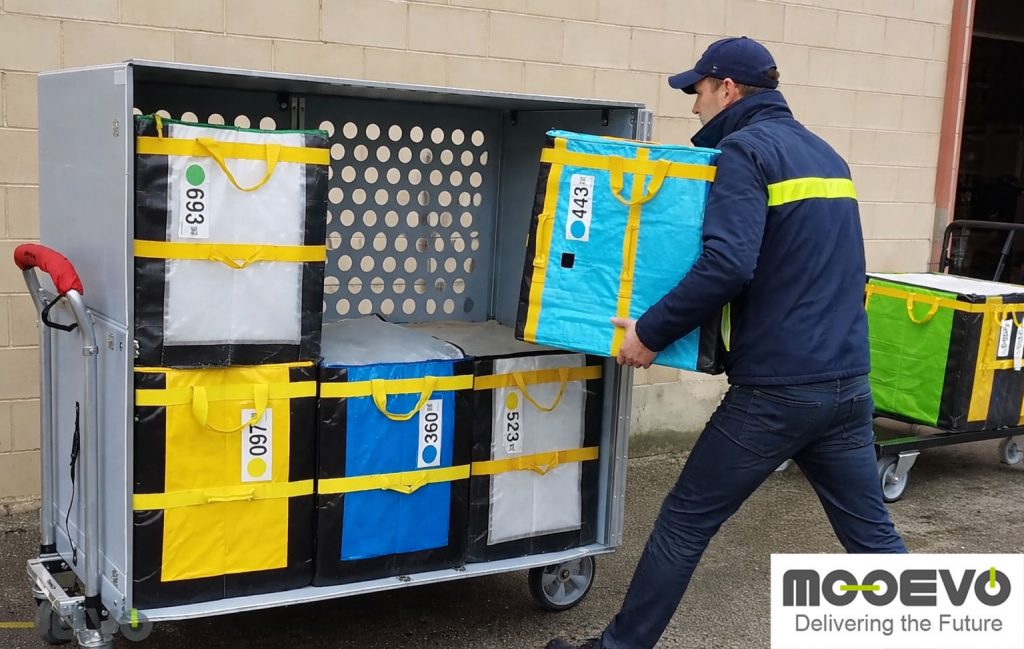
As cities continue implementing low-emission zones and stricter traffic regulations, these benefits become even more valuable.
MOOEVO and the Future of Urban Logistics
At MOOEVO, we believe that the future of last-mile delivery will not depend on a single technology. Instead, it will be built through intelligent combinations of microhubs, cargo bikes, light electric vehicles, and electric-assisted delivery carts.
Our electric mobility solutions are designed to help logistics operators move goods efficiently within dense urban environments while reducing physical effort, operational costs, and environmental impact.
The success of programs such as New York City’s microhub initiative demonstrates that the transition toward cleaner and more efficient urban logistics is already underway. The challenge now is ensuring that delivery teams have the right tools to make this new model scalable, productive, and sustainable.
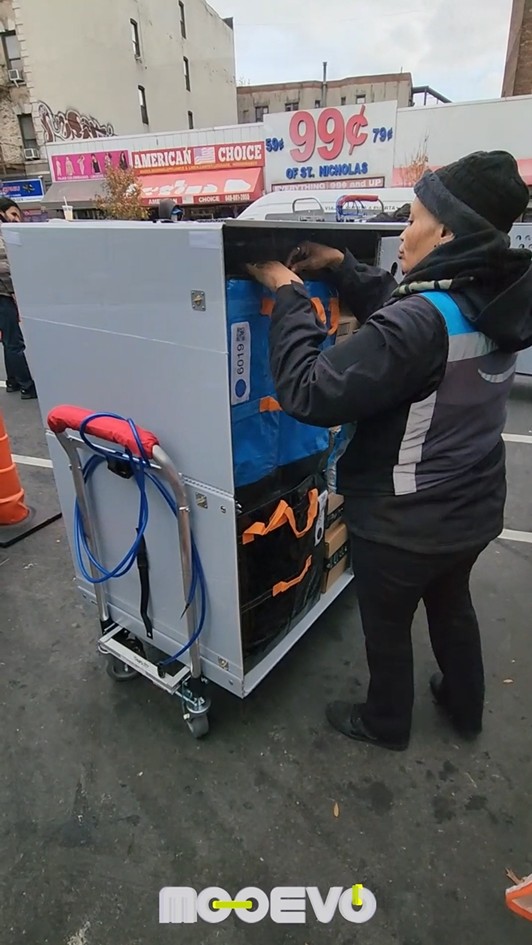
As cities continue to evolve, electric-assisted delivery carts will play an increasingly important role in connecting microhubs to customers, helping create smarter, cleaner, and more efficient last-mile delivery networks.
