

In cities like New York City, last-mile delivery is no longer just a logistics problem. It is an urban systems challenge. High density, vertical housing, curb competition, and strict enforcement mean that traditional van-centric delivery struggles to scale without disrupting daily city life.
This is where on-foot delivery emerges not as an exception, but as a structural component of urban logistics.

From Vehicles to Urban Infrastructure
In New York, delivery vehicles increasingly behave less like movers and more like temporary infrastructure nodes. Trucks stop briefly, unload consolidated batches, and enable a distributed network of walkers to complete deliveries on foot. The efficiency of the system depends not on driving distance, but on how well space, time, and people are coordinated once the vehicle stops.
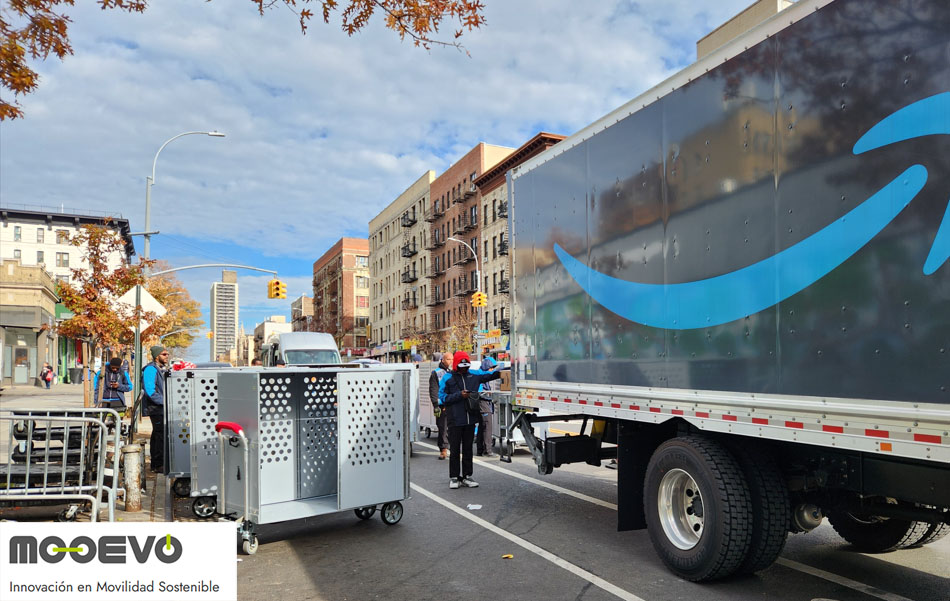
Density Favors Pedestrian Logistics
Urban density changes the math of delivery. Serving ten addresses on the same block is far more efficient on foot than by vehicle. Elevators, lobbies, and stairwells become extensions of the delivery route. In this context, walking is not slower; it is often the fastest and most reliable option.
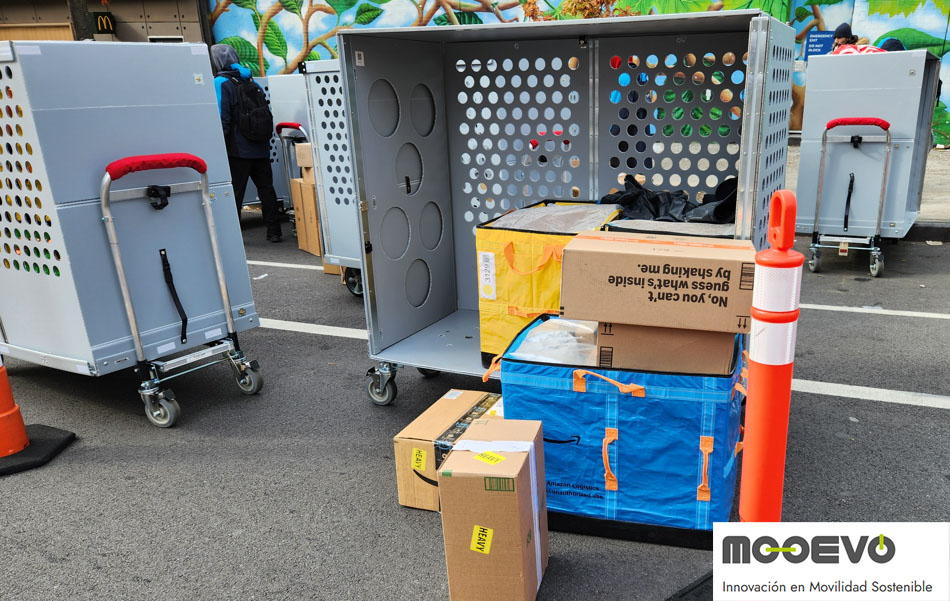
Carts as the Missing Link
On-foot delivery at scale would not be viable without carts. They act as mobile micro-warehouses, allowing walkers to carry structured loads, preserve route order, and move efficiently through sidewalks and buildings. Carts also enable vertical consolidation, which is critical in high-rise environments common across Manhattan.
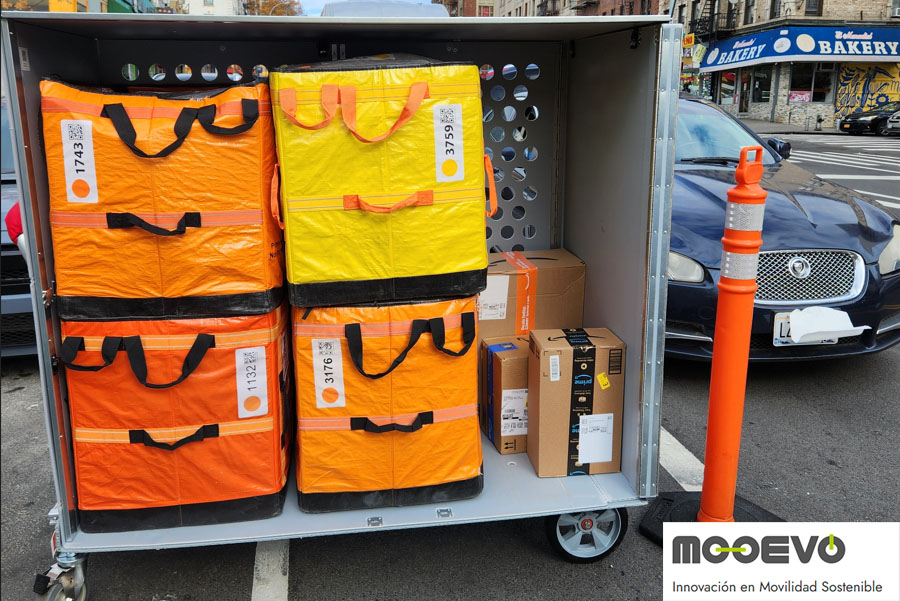
Security, Privacy, and Urban Acceptance
Organized pedestrian delivery improves more than efficiency. Contained loads reduce exposure to theft and limit visibility of customer data on shipping labels. From a public standpoint, walkers with carts are less disruptive than double-parked vans, making this model more compatible with everyday urban life.
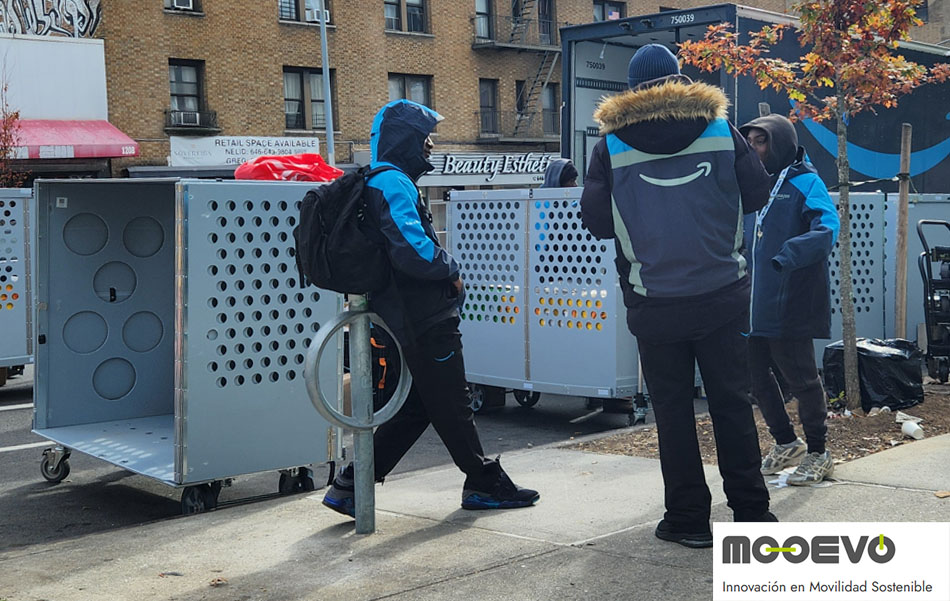
A Scalable Urban Strategy
Amazon’s walker-based delivery reflects a broader shift toward human-scale logistics. As cities restrict vehicle access and prioritize livability, systems that rely on people, organization, and lightweight tools scale more sustainably than those dependent on additional vehicles.

Transforming vehicles
On-foot package delivery in New York City is not a temporary workaround. It is a response to the physical and regulatory realities of dense cities. By transforming vehicles into deployment hubs and empowering walkers with the right equipment, urban logistics evolves from a traffic problem into an integrated city service.

Empowering On-Foot Delivery with the Right Tools
MOOEVO supports on-foot delivery models by providing delivery carts designed specifically for dense urban environments. These carts act as mobile workstations, allowing walkers to transport larger volumes of packages in an organized way, maintain route order, and move efficiently through sidewalks, elevators, and building lobbies.
By reducing physical strain and improving load control, MOOEVO solutions help sustain productivity throughout long delivery routes.

Enabling Scalable, City-Compatible Logistics
By focusing on lightweight, robust, and maneuverable designs, MOOEVO helps logistics operators adapt to cities like New York, where vehicle access is limited and curb space is scarce.
Using vehicles as deployment hubs and carts for the final meters, MOOEVO solutions support a delivery model that reduces congestion, improves security and privacy, and integrates more naturally into everyday city life, making on-foot delivery a scalable and future-ready urban strategy.

As cities continue to restrict vehicle access and prioritize livability, on-foot delivery models will play an increasingly central role in the future of last-mile logistics in Manhattan and NYC, and exportable to all major cities in the United States.
