

In dense metropolitan areas like New York City, traditional van-based parcel delivery faces structural limitations. Congestion, curb scarcity, pedestrian density, and strict parking enforcement make last-mile delivery increasingly inefficient when every stop depends on a vehicle. As a result, on-foot delivery models have become a critical component of Amazon’s urban logistics strategy with their DSP and Walker Program.
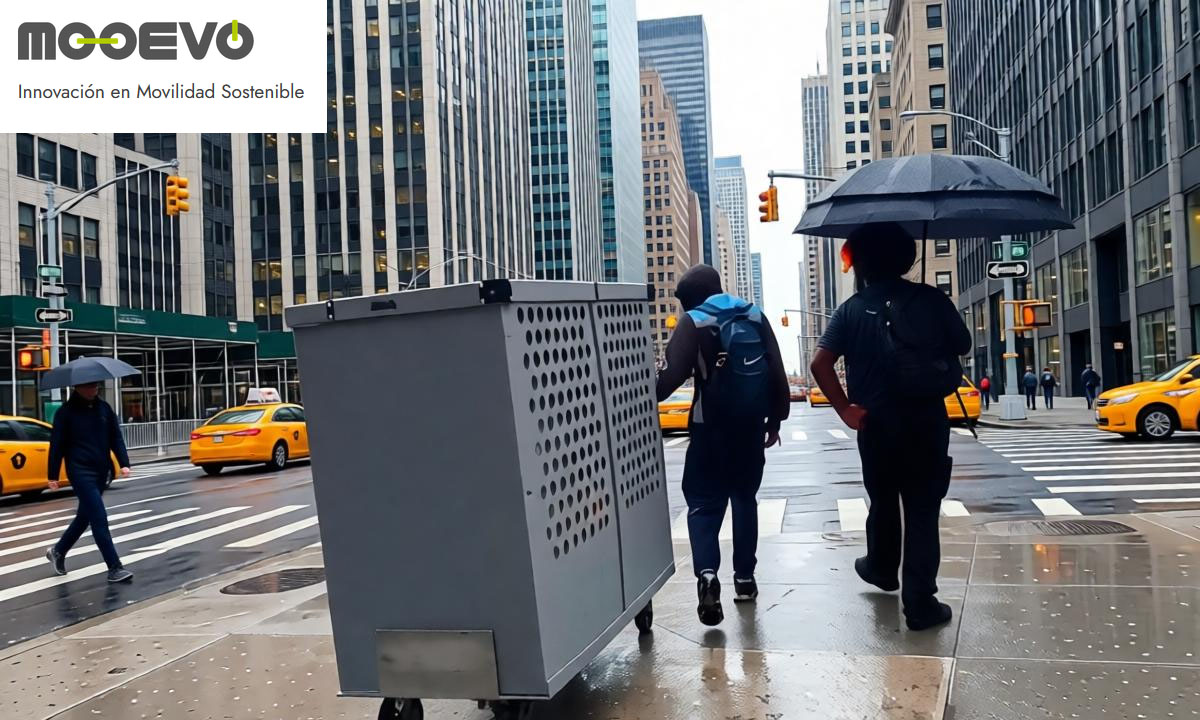
Why New York Requires a Different Delivery Model
New York’s urban fabric is defined by vertical buildings, narrow streets, and constant pedestrian flow. In many neighborhoods, especially Manhattan, delivery vans struggle to park legally or remain stationary long enough to serve multiple addresses. This reality pushes logistics operators to rethink how parcels reach the final door.
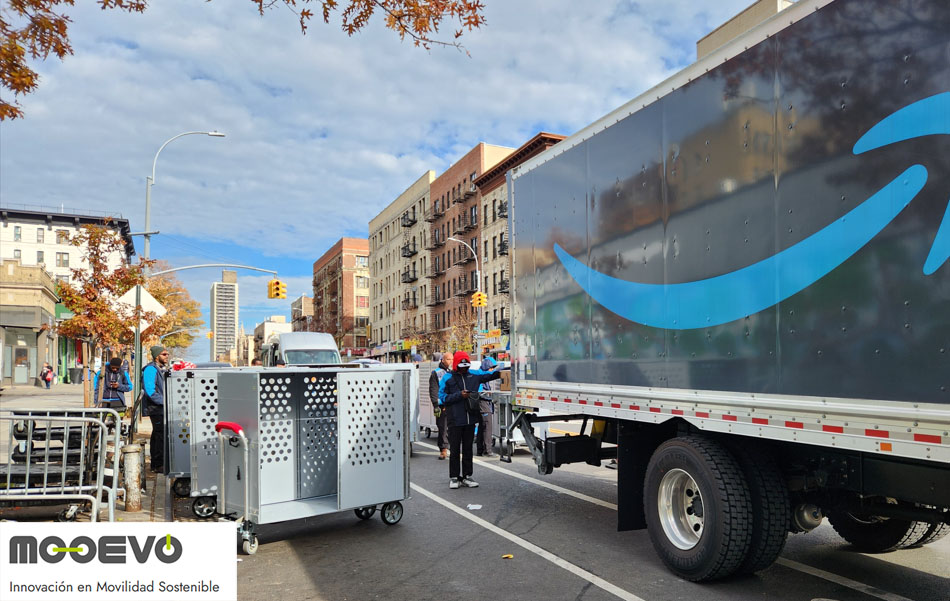
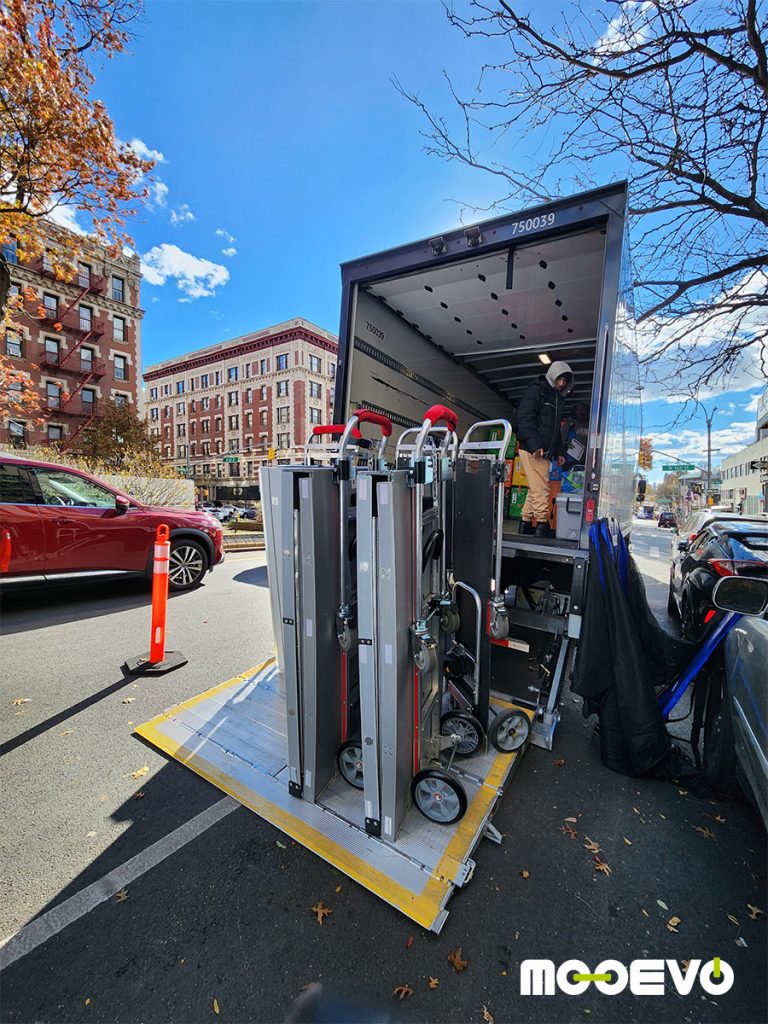
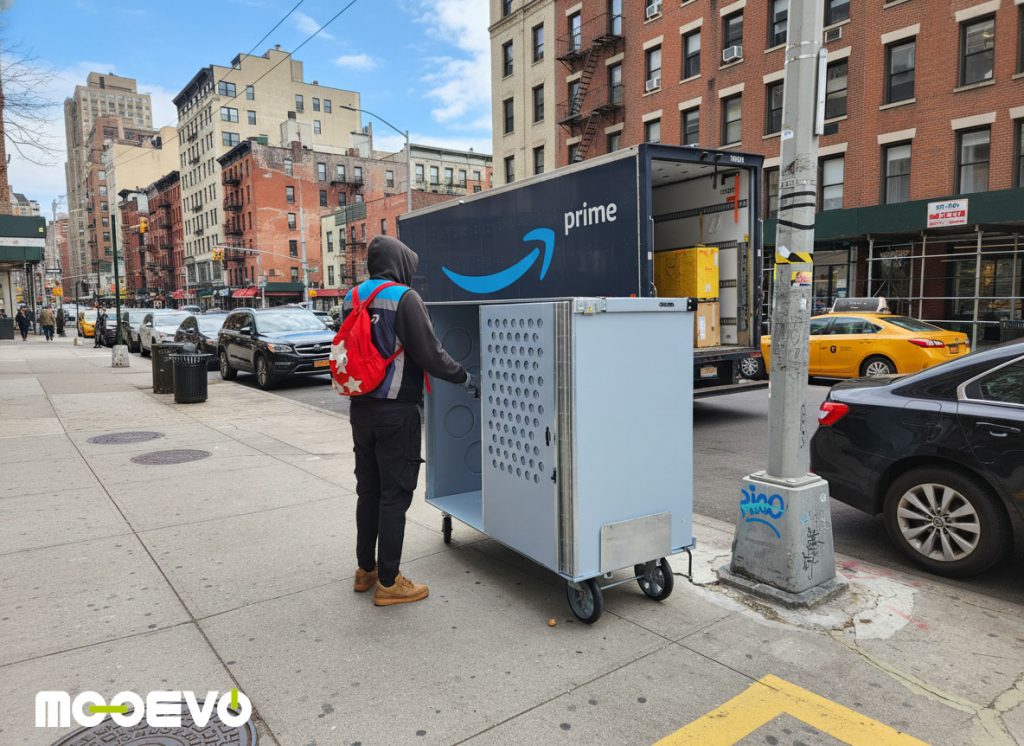
Rather than treating the van as the delivery tool, it increasingly functions as a mobile deployment hub, supplying delivery workers (DA) who complete routes on foot within predefined zones.
The Walker-Based Delivery Approach
Amazon’s on-foot delivery model relies on “walkers” who receive a batch of packages and distribute them by walking several blocks or serving multiple buildings consecutively. This approach minimizes vehicle movements while maximizing delivery density per stop.
Walkers typically operate within compact geographic areas, allowing them to:
- Serve multiple deliveries without reloading
- Navigate pedestrian-only zones freely
- Avoid parking violations and traffic delays
- Maintain predictable delivery times in high-density areas
Urban Deployment Points and Zoned Operations
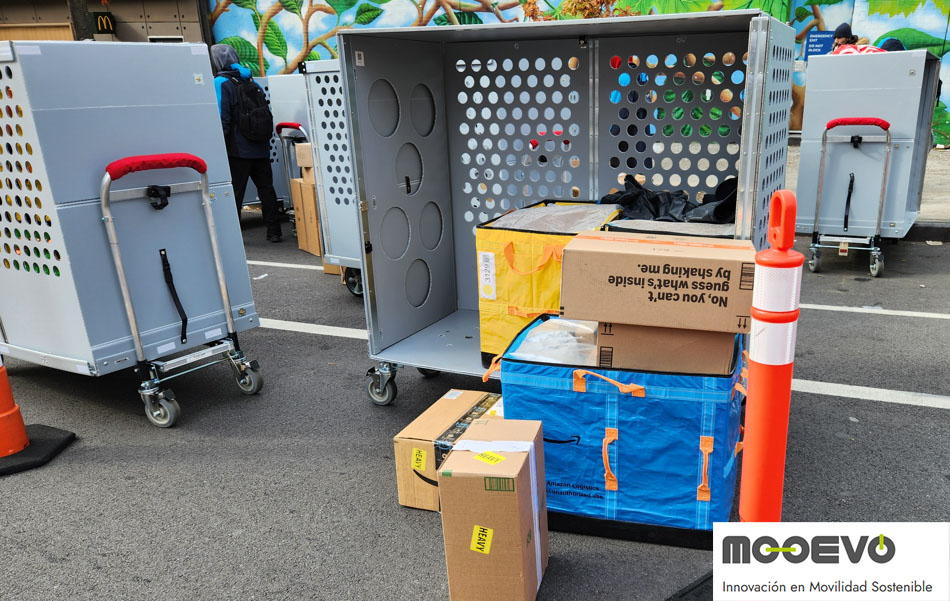
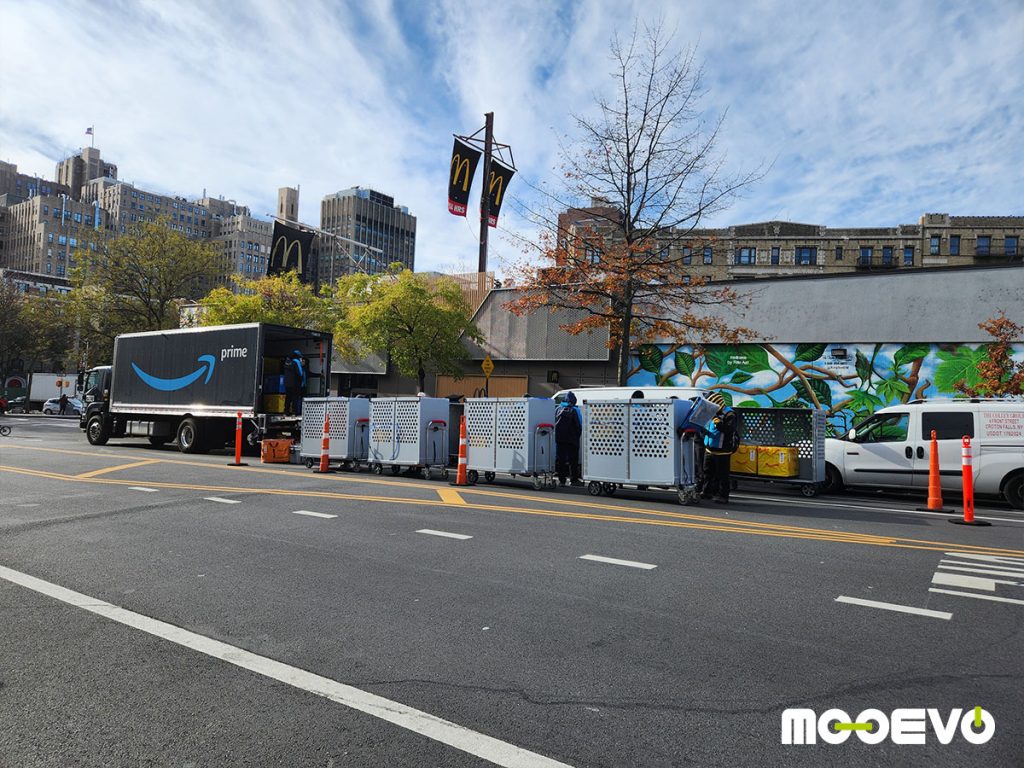
In New York, city-managed curb zones, loading areas, and temporary staging points play a key role. Delivery trucks unload parcels at approved locations, where walkers are deployed into surrounding neighborhoods. These zones are often time-limited and tightly regulated, reinforcing the need for fast, organized handoff between vehicle and pedestrian delivery.
This structure aligns with broader municipal goals to reduce curb congestion and limit unnecessary vehicle circulation in dense districts.
The Role of Carts in On-Foot Delivery
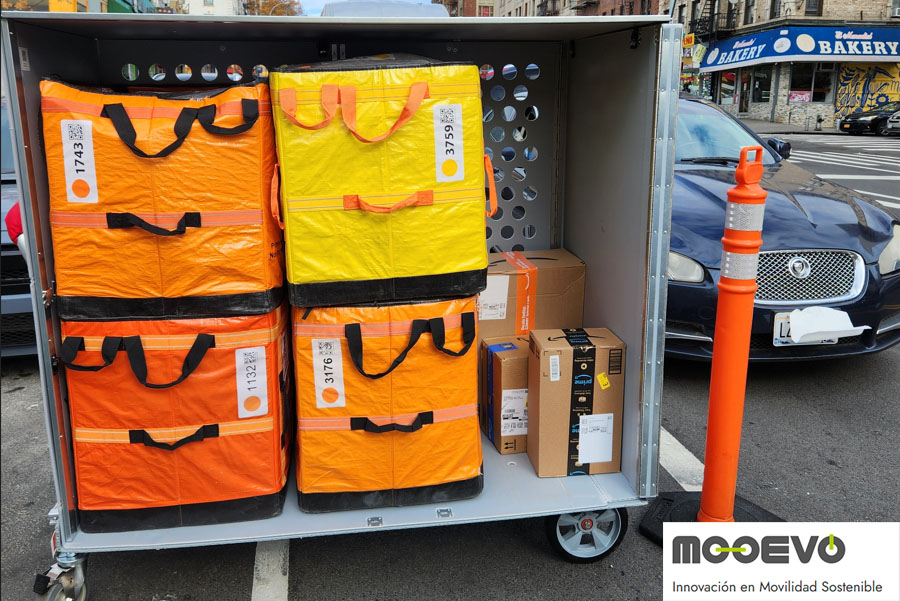
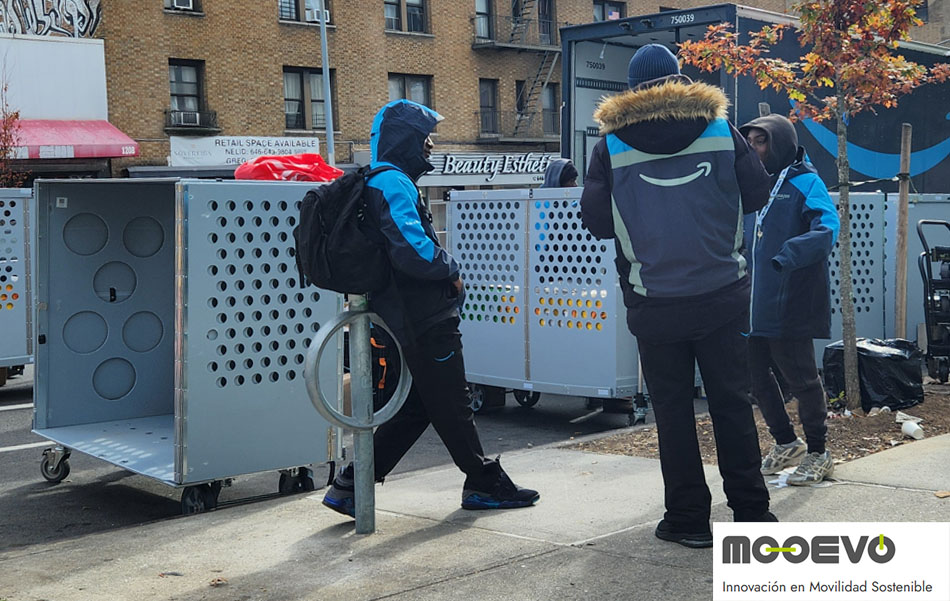
Walking delivery at scale is only viable when supported by the right equipment. Carrying multiple packages by hand quickly becomes inefficient and physically unsustainable. This is where delivery carts become essential.
Well-designed carts allow walkers to:
- Transport higher parcel volumes per trip
- Maintain package order and route logic
- Reduce physical strain and fatigue
- Move efficiently through sidewalks, elevators, and building lobbies
Carts also help consolidate deliveries vertically, making them particularly effective in high-rise residential and commercial buildings.
Efficiency Beyond Speed
In on-foot delivery, efficiency is not measured by speed alone, but by flow. The ability to unload once, serve many stops, and return without repeated vehicle interactions significantly improves productivity. It also reduces idle time, failed delivery attempts, and route fragmentation.
This model proves especially effective during peak hours when vehicular movement is most restricted.
Security, Privacy, and Professionalism
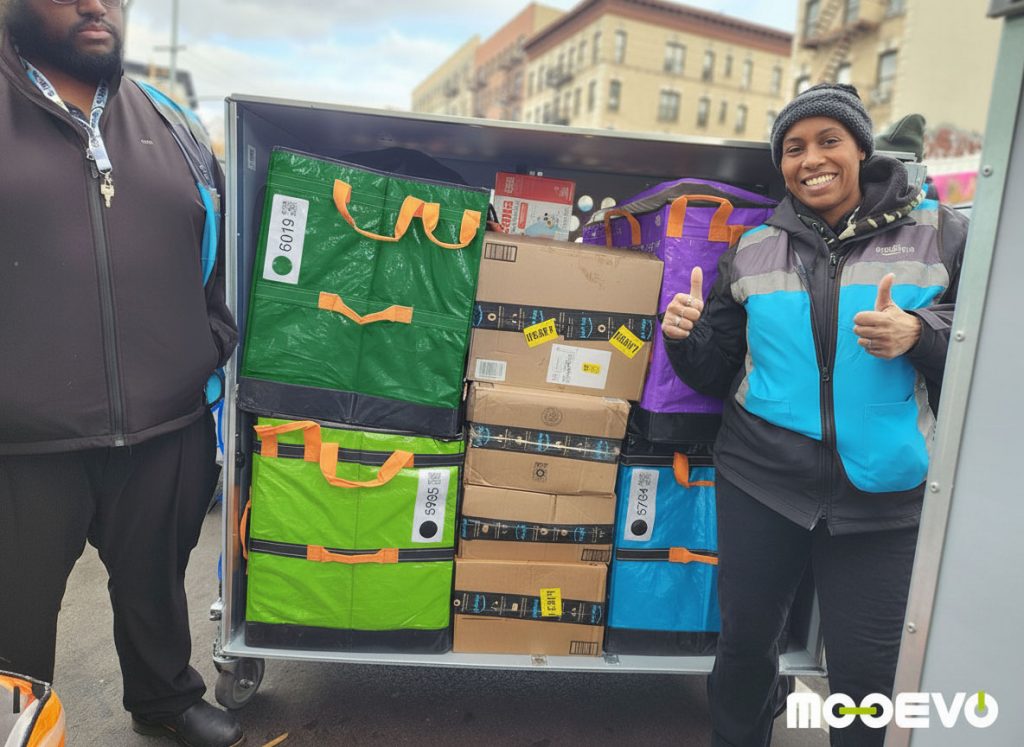
Another advantage of organized on-foot delivery is improved package security. When parcels are transported in controlled, closed, or well-organized systems, the risk of opportunistic theft is reduced. Additionally, limiting the visibility of shipping labels helps protect recipient data in public spaces.
From a public perception standpoint, orderly pedestrian delivery is less disruptive and more compatible with daily city life.
Why On-Foot Delivery Is Expanding
Amazon’s experimentation with walker-based delivery reflects a broader trend across urban logistics: the shift from vehicle-centric to people-centric last-mile solutions. In cities like New York, where adding more vans is neither practical nor welcomed, optimizing human-scale logistics becomes the most realistic path forward.
Conclusion MOOEVO
On-foot package delivery in New York City is not a workaround; it is an urban logistics strategy shaped by physical constraints, regulation, and density. By using vehicles as deployment hubs and empowering walkers with the right tools, Amazon and similar operators are redefining how last-mile delivery functions in the world’s most complex urban environments.
As cities continue to restrict vehicle access and prioritize livability, on-foot delivery models will play an increasingly central role in the future of last-mile logistics in Manhattan and NYC.
